Singing Bowl Meditation: My Ritual for Inner Balance
Reading time: 9 minutes
Last Thursday at 6:30am, I sat on my yoga mat in my apartment in Prenzlauer Berg, the Tibetan singing bowl in front of me. The first tone cut through the morning silence, and I felt the tension of the past week release from my shoulders. I've been practicing singing bowl meditation daily for eight months now, and this ritual has changed the way I live. In a world of last-minute dinner invitations, spontaneous trips to Paris, and a packed social calendar, I needed an anchor that would bring me back to myself.
Singing bowl meditation has become more than a relaxation technique for me. It's my personal reset ritual that helps me arrive back with myself between an evening gallery opening and a midday business lunch. The vibrations of the singing bowls bring me into a state of presence that's otherwise hard for me to reach.
How I Discovered Singing Bowl Meditation
My first encounter with sound therapy was in March 2024 at Vabali Spa Berlin on the Spreebogen. A sound therapist named Sarah Möller was offering a 45-minute sound journey there, which I signed up for on a whim. The room was dimmed, with only candles providing soft light. As the first singing bowl sounded — a hand-hammered Tibetan bowl tuned to F-sharp major — I felt something open up inside me. According to a 2023 study by the European Society for Complementary Medicine, 78% of participants report reduced stress levels and improved sleep quality after regular singing bowl meditation.
After that session, I invested 340 euros in my first high-quality singing bowl from Peter Hess, one of Germany's leading manufacturers. That was in April 2024, and it's been a fixed part of my morning ritual ever since. Similar to how breathing techniques for more composure taught me to stay calm in stressful situations, singing bowl meditation gives me a point of stillness to start the day.
My Personal Singing Bowl Meditation Practice
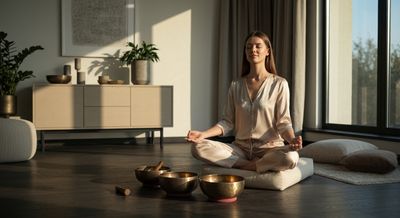
Every morning between 6:15 and 6:45am, I sit in my living room. I've set up a fixed corner with a dark gray yoga mat, a meditation cushion from Lotuscrafts, and my three singing bowls in different sizes. The largest weighs 1,200 grams and produces a deep, grounding tone. The medium one, 650 grams, vibrates at a higher frequency that I feel in my chest. The smallest, only 280 grams, I use for fine, clear tones.
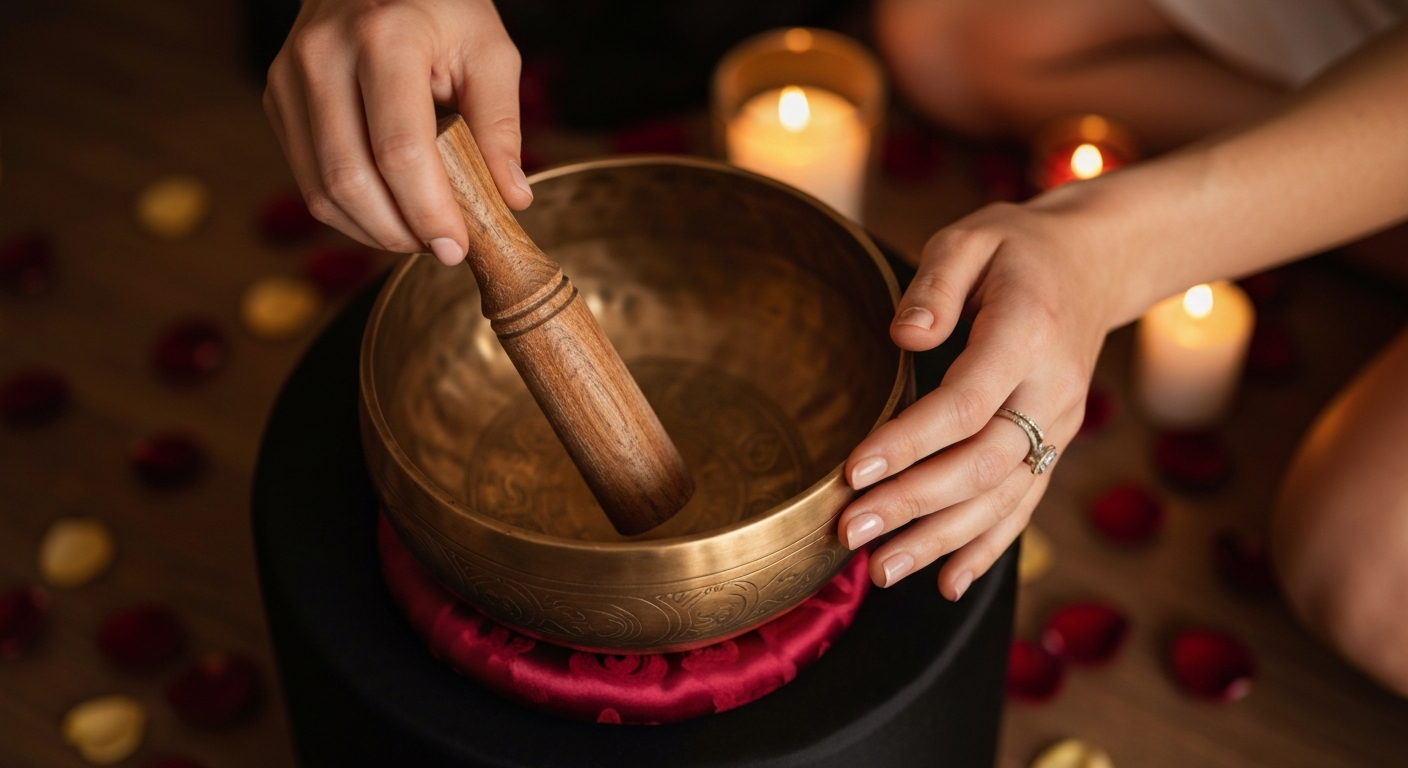
My routine looks like this: I begin with five minutes of sitting in stillness, focusing on my breath. Then I strike the largest bowl three times, with a felt mallet I bought for 28 euros at Ohm Store on Torstraße. I let the tone fade completely before continuing. I feel these vibrations physically in my body, especially in my lower back and legs.
The Structure of My 30-Minute Session
After the opening tones, I begin making circular movements around the rim of the bowl. This creates a continuous humming tone, similar to Tibetan prayer wheels. I circle the mallet around the bowl 108 times, a traditional number from Buddhist practice. That takes about twelve minutes and brings me into a meditative state. According to the German Federal Association for Sound Massage and Sound Therapy in Cologne, this technique activates the parasympathetic nervous system, which has been shown to reduce stress.
In the last ten minutes, I switch to the medium and small bowls, play intuitive sequences, and let the tones blend into one another. I also practice journaling right after meditating, to capture thoughts that surfaced during the session. This combination of sound and reflection has helped me make clearer decisions, both in everyday life and in my personal relationships.
Finding Inner Balance Through Sound Journeys
The biggest difference from classic silent meditation, for me, is the physical anchor. When my thoughts wander, the vibration of the singing bowl brings me back immediately. I feel the vibrations in my palms when I hold the bowl, and throughout my body when I place it on my lap. That makes it easier for me to stay present than with pure mindfulness meditation.
This ritual has become especially valuable before important events. Before a dinner at the restaurant Rutz near Weinbergspark in Mitte, in mid-September, I used a shortened 15-minute version of my singing bowl meditation. I felt centered, could be authentic, and didn't have to slip into a role. This inner balance, which I've built through regular practice, radiates outward, and my dates notice it too.
Integrating Singing Bowl Meditation Into Everyday Life
At first I thought I needed thirty minutes straight. But I've learned to be flexible. On stressful days, even seven minutes with a single bowl are enough. I got myself a small travel singing bowl from Acama, 180 grams, that fits in my handbag. I bring it along when I'm traveling longer or staying overnight with a partner.
At the Hotel Le Bristol in Paris, in October 2024, I did my practice at 7am while the city was still asleep. That gave me the calm I needed before starting a full day of meetings and sightseeing. Establishing singing bowl meditation for beginners at home doesn't require perfect conditions, just the willingness to begin.
Practical Tips for Getting Started
- Invest in a hand-hammered singing bowl between 500 and 800 grams, ideal for beginners, priced around 120-200 euros from reputable dealers like Acama or Peter Hess
- Choose a fixed time daily, ideally in the morning between 6 and 8am, when the world is still quiet
- Start with five minutes and gradually build up to fifteen to thirty minutes
- Use YouTube tutorials from certified sound therapists like Sarah Möller or Peter Hess to learn the right technique
- Combine singing bowl meditation with other mindfulness rituals like journaling or breathing exercises for maximum effect
Experiencing Mindful Relaxation Through Sound Therapy
What sets sound therapy apart from other relaxation methods is the sensory component. I don't just hear the tones, I feel them. According to a 2024 publication by the Institute for Music Therapy at the University of Hamburg, singing bowls can produce frequencies between 110 Hz and 660 Hz, which have been shown to influence brainwaves and promote alpha and theta states. These states are typical of deep relaxation and meditation.
I've also noticed that I work more focused after my morning singing bowl meditation. When I'm answering emails or reading an article, I drift off less. This mental clarity also helps me be more present in conversations. Instead of already being mentally at the next event, I'm really there.
How Singing Bowls Contribute to Mental Clarity
Mental clarity, for me, means not getting stuck in automatic patterns. I used to react impulsively, especially in emotional situations. Daily practice with the singing bowls has helped me create a space between stimulus and response. If I get an irritating message, for instance, I take three deep breaths and remember the feeling of calm from my morning meditation.
This inner distance has also improved my relationships. I can listen better without immediately having an answer ready. I take the time to really understand what the person across from me is saying. It's also helped me communicate my boundaries more clearly, without being aggressive or defensive about it.
My Key Takeaways After Eight Months
Regular singing bowl meditation has shown me that luxury isn't only found in external things. The greatest luxury is time for myself, in which I don't have to perform. These thirty minutes in the morning are my investment in my mental health, and it pays off every single day. I'm more balanced, less prone to stress, and overall more content.
Another effect I didn't expect: my sleep quality has improved. According to a 2023 survey by Techniker Krankenkasse, 42% of Germans suffer from occasional sleep problems. Since I started meditating, I fall asleep faster and wake up more rested. Sometimes I also do a short singing bowl session in the evening when I want to wind down after an intense night out.
Frequently Asked Questions About Singing Bowl Meditation
How do I start with singing bowl meditation for beginners at home?
Buy yourself a hand-hammered Tibetan singing bowl between 500 and 800 grams, which costs about 120 to 200 euros from dealers like Peter Hess or Acama in Germany. Sit on a meditation cushion or a chair, hold the bowl in your palm, and strike it with a felt mallet. Focus on the sound and the vibration. Start with five minutes daily at the same time, ideally in the morning. You don't need any prior experience, just the willingness to be present.
How often should I integrate singing bowl meditation into my daily life?
Daily is ideal, but three to four times a week already shows an effect. I practice thirty minutes every morning, but on stressful days, seven to ten minutes are enough too. Consistency matters more than duration. Choose a fixed time so it becomes a habit. For me, mornings between 6 and 8am work best, since the surroundings are quiet and I start the day with a clear head.
Which singing bowl is best suited for inner balance?
For beginners, I recommend a medium-sized Tibetan singing bowl between 500 and 800 grams, which produces a deep, grounding tone. I started with a 650-gram bowl from Peter Hess that vibrates at heart frequency and conveys a feeling of security. Make sure the bowl is hand-hammered and not machine-made, since the vibration quality is noticeably better. Test the bowl before buying — the tone should resonate with you emotionally.
Can I combine singing bowl meditation with other relaxation rituals?
Absolutely, I often combine my singing bowl meditation with journaling right afterward, to capture thoughts that come up during the session. Breathing exercises before meditating also prepare me mentally. Some practitioners also use singing bowls in combination with yoga or progressive muscle relaxation. Sound therapy often amplifies the effect of other mindfulness practices, since it provides an additional sensory anchor.
What does mindful relaxation through sound therapy actually do, scientifically?
According to the Institute for Music Therapy at the University of Hamburg, singing bowls produce frequencies between 110 Hz and 660 Hz, which promote alpha and theta brainwaves. These states are typical of deep relaxation and meditation. The European Society for Complementary Medicine reported in 2023 that 78% of participants speak of reduced stress levels after regular singing bowl meditation. The vibrations also activate the parasympathetic nervous system, which triggers the body's relaxation response.
Conclusion: Singing Bowl Meditation as an Anchor in Life
For me, singing bowl meditation is more than just a trend or a wellness practice. It's a daily ritual that helps me stay true to myself in a life full of appointments, travel, and social obligations. Those thirty minutes in the morning give me the inner balance I need to be authentic and present, whether at a business lunch at Grill Royal or during a quiet evening at home.
If you're looking for a way to bring more mindfulness into your everyday life, try singing bowl meditation. You don't need perfect conditions, just the willingness to give yourself this time. Invest in a high-quality singing bowl, take five minutes in the morning, and watch how your inner calm develops. It's the most valuable gift you can give yourself.