Handbag Investment: My Luxury Pieces as an Asset Class
Reading time: 12 minutes
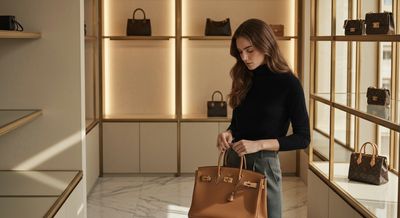
My Hermès Kelly from 2019 is worth 4,200 euros more today than what I paid for it. No joke. While my friends park their savings in fixed-term deposits earning a measly 2% interest, my portfolio hangs on hangers in my walk-in closet. Luxury handbag investment stopped being a gimmick a long time ago — it's a hard-nosed investment strategy for women who want to combine style and returns. I speak from experience: for four years now I've been deliberately building a collection that not only fits my personal style, but also gives my wealth a real boost.
The crazy part? I actually wear these bags. They don't sit in display cases like artworks — they come with me to dinner dates at Cipriani Munich, weekend trips to Paris, and business meetings. And while I enjoy them, their value climbs. According to the Knight Frank Luxury Investment Index, high-quality handbags rose in value by an average of 76% between 2020 and 2023, while the DAX gained only about 15% in the same period. Those numbers were what convinced me to risk my first major investment.
Why Designer Handbags as an Asset Are More Than Just a Trend
The market for luxury handbags has fundamentally changed. What used to be pure status consumption is now a recognized asset class. The platform Rebag publishes its Clair Report quarterly, tracking the value stability of over 50 luxury brands. Hermès leads with an average resale value of 103% of the original price, followed by Chanel at 87%.
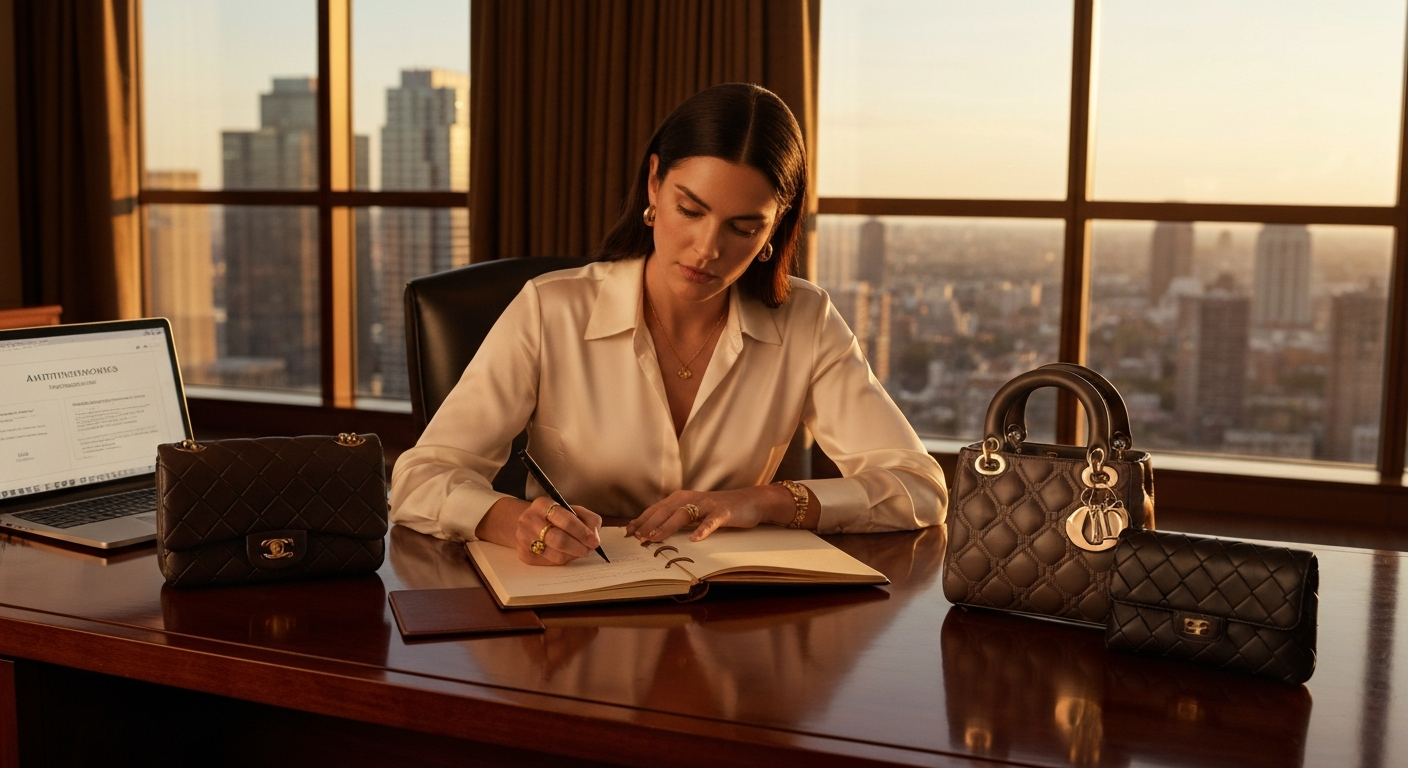
My personal strategy rests on three pillars: I only buy models with demonstrable value appreciation, I care for them like treasures, and I meticulously document every purchase. In my journal I note the purchase date, price, condition, and market value development. That might sound obsessive, but it's exactly this discipline that separates smart investment from impulsive shopping.
A concrete example: a Chanel Classic Flap in medium cost about 5,500 euros in 2019. Today the retail price is over 10,200 euros. Even on the secondhand market, a well-preserved 2019 version easily fetches 8,000 to 9,000 euros. That's an appreciation of nearly 50% in four years — for an accessory I use regularly, no less.
Which Designer Handbags Increase in Value
Not every luxury bag is automatically a good investment. I had to learn that the hard way when I bought a Louis Vuitton Multicolore Speedy in 2020 simply because I liked it. Today it's probably worth 60% of what I paid. The lesson: personal taste is nice, but investment pieces need hard facts.
The Top Performers in My Collection
Hermès Birkin and Kelly are the undisputed queens. A Birkin 25 in black with palladium hardware, which I bought in 2021 for 7,800 euros at Hermès Paris on Rue du Faubourg Saint-Honoré, is currently trading on Vestiaire Collective for 12,500 euros. The catch with Hermès: you can't just buy these bags. You build a relationship with your sales associate, buy other pieces over months, and hope for the coveted offer. That artificial scarcity drives prices to absurd heights.
Chanel systematically raises its prices, roughly twice a year by 10-15%. A strategy that fuels the secondary market. My Boy Bag in chevron leather from 2020 automatically gained value through these price increases, without me having to do anything. According to an analysis by Baghunter.com, Chanel has raised prices by over 60% since 2016.
Bottega Veneta is experiencing a revival under Daniel Lee and now Matthieu Blazy. The Jodie Bag and the Cassette have become absolute must-haves. I bought my Jodie Mini in Fondant in late 2021 for 1,850 euros; the retail price now stands at 2,500 euros, and well-preserved examples go for 2,000 to 2,200 euros on the resale market.
The Criteria for Investment Worthiness
- Iconic status: the bag must have a recognizable, timeless design that has been on the market for at least five years
- Limited availability: the harder it is to get, the better for value appreciation
- Neutral colors: black, beige, navy, and browns perform better than trend colors
- Hardware quality: gold and palladium hold up better than silver-plated hardware
- Brand heritage: houses with over 50 years of tradition have more stable resale values
How I Recognize Authentic Designer Handbags
Every investor's nightmare: buying a fake. By now I've developed an almost forensic eye, but early on I came close to falling for counterfeits more than once. The market for luxury replicas has become frighteningly professional. According to a 2021 OECD report, counterfeit luxury goods account for about 3.3% of global trade, equivalent to over 460 billion euros.
My Authentication Checklist
I buy exclusively from authorized dealers or verified platforms like Vestiaire Collective, which have a multi-step authentication process. Every bag is checked there by experts before being shipped. For my Hermès Kelly, I additionally obtained an independent assessment from Entrupy, a service that uses AI-powered microscope analysis and issues a certificate of authenticity for 40 euros.
With Chanel, I check the hologram number against my receipt. Since 2021, Chanel has used microchips instead of holograms, making counterfeiting even harder. The stitching has to be absolutely perfect — with Chanel it's exactly 11 stitches per 3 centimeters. I bought myself a magnifying glass and actually count them. That might sound obsessive, but with an 8,000-euro investment, I want 100% certainty.
Another trick: I photograph every detail at the time of purchase, especially the serial number, the embossing inside the lining, and the hardware markings. That documentation is worth gold if I ever want to sell the bag. Buyers on the resale market expect airtight proof.
Is a Hermès Bag Worth It as an Investment
The honest answer: yes, but it's complicated. Hermès is the only luxury brand that regularly achieves over 100% of its retail price on the secondary market. A 2023 study by Baghunter shows that a Hermès Birkin has outperformed the S&P 500 and even gold over the last 35 years, with an average annual return of 14.2%.
But: you have to get the right one. A Birkin in Etoupe, black, or gold with classic hardware is significantly more valuable than exotic colors or limited editions, which are harder to sell. My Kelly in black was strategically the best choice, because it's universally wearable and has constant demand.
The sticking point is access. Hermès doesn't simply sell Birkins and Kellys to whoever waves money around. You have to build a purchase history. I spent over a year buying scarves, jewelry, and smaller leather goods before my SA offered me the Kelly. That means your initial investment is higher than just the price of the bag — budget an extra 2,000 to 3,000 euros for relationship-building.
Still, it was worth it. Just knowing that this bag doesn't lose value but gains it gives me a sense of financial security. It's like a little savings account, just much prettier and directly usable.
Understanding Chanel Bag Value Appreciation
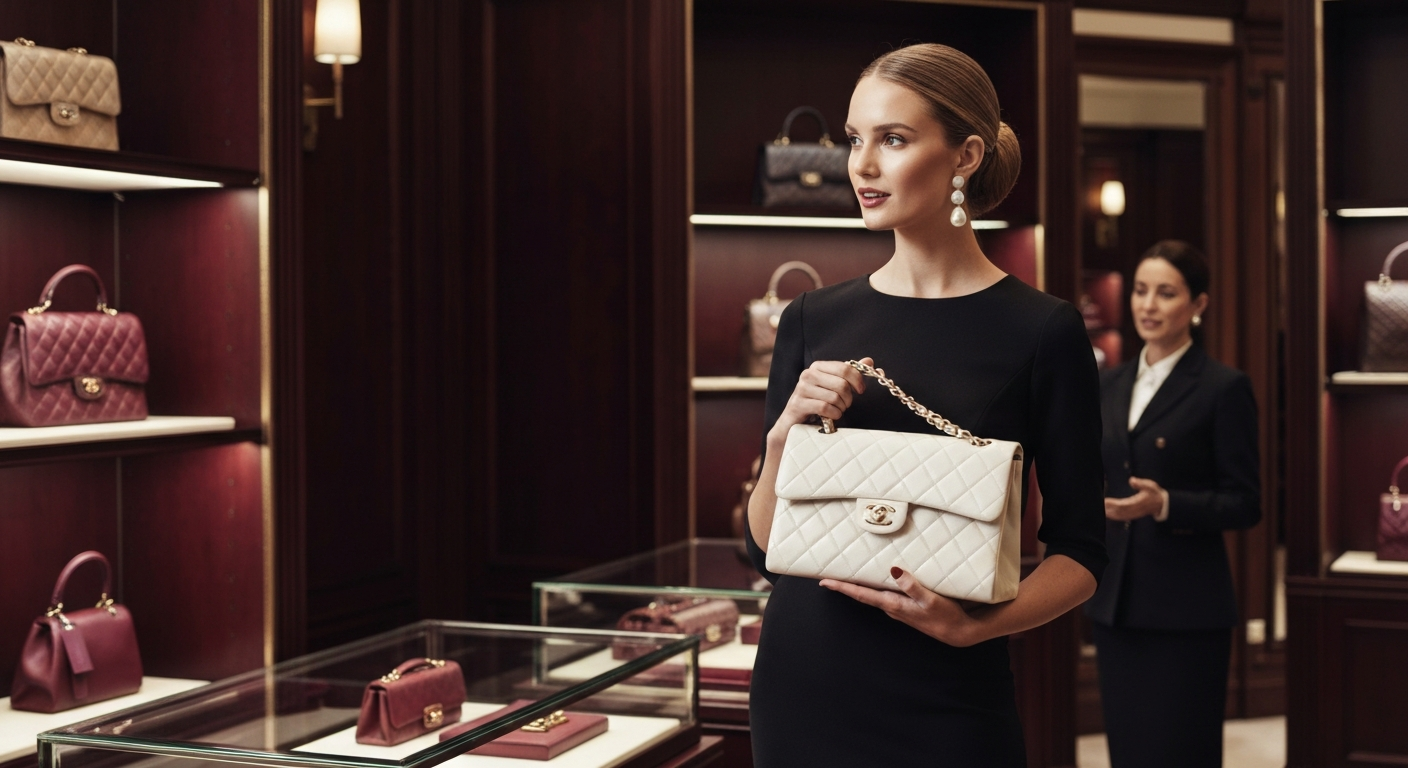
Chanel is my second pillar alongside Hermès. The pricing strategy is aggressive: since 2016, Chanel has raised prices for the Classic Flap by over 100%. That means any bag bought before 2020 is automatically worth more today, even if it's been worn.
I track the price increases religiously. Chanel typically raises prices in February and September. So if I'm planning to buy a new bag, I do it in January or August, right before the increase. That might sound petty, but with a price jump of 500 to 800 euros, it makes a difference.
My Boy Bag Medium in caviar leather cost me exactly 4,400 euros in January 2020. Today the retail price is 7,600 euros. Even if I sold it now, I could ask 6,500 to 7,000 euros, depending on condition. That's an appreciation of over 50% in four years.
The best models for value appreciation at Chanel are the Classic Flap in medium or jumbo, the Boy Bag, and the 19 Bag. Limited editions like the Cruise collections can be hyped short-term, but perform worse long-term because they're less timeless.
Buying Luxury Accessories as an Investment Strategy
My strategy goes beyond bags. I also invest in scarves, jewelry, and even shoes when they meet the right criteria. A limited-edition Hermès scarf can trade for 30-50% above retail once it's sold out. I bought a "Les Clés" scarf from 2021 for 420 euros, which now trades for 650 euros on eBay.
With jewelry, I focus on Cartier Love Bracelets and Van Cleef Alhambra necklaces. These pieces have extreme resellability. My Cartier Love Bracelet in yellow gold cost about 6,500 euros in 2020; today the retail price is 8,100 euros. Even used, it fetches 7,200 to 7,500 euros.
Shoes are tricky. Louboutins lose value quickly because the red soles wear down. But Hermès Oran sandals or Chanel slingbacks in classic colors hold their value well, especially if lightly worn. I have a pair of Orans in gold from 2021 that I've maybe worn five times. They're practically like new and could be resold for 90% of the purchase price.
Diversification in the Luxury Portfolio
Just like with stocks, I don't put everything on one card. My current luxury portfolio looks roughly like this: 50% bags, 30% jewelry, 20% scarves and accessories. This split minimizes risk and maximizes the chances of value appreciation.
I've also learned to ignore trends. Today's it-bag is often tomorrow's shelf-warmer. Instead, I focus on evergreens that have been in demand for decades. A Chanel 2.55 will still be coveted in ten years; a Fendi Baguette maybe not.
Care and Documentation: The Difference Between Profit and Loss
Owning an investment bag is like having a pet. It needs care, attention, and regular maintenance. I have my Hermès bags checked every two years at the Hermès Spa Service in Paris. That costs 150 to 300 euros, but it preserves the condition, and with it the value.
I store my bags in their original dust bags, filled with acid-free tissue paper so they keep their shape. I avoid direct sunlight and extreme temperatures. Every bag has a fixed spot in the closet, organized by color and brand.
Documentation matters just as much as care. I keep all original receipts, authentication certificates, and service records in a fireproof safe. Digitally, I've also backed everything up in an encrypted cloud. Sounds paranoid? Maybe. But if I want to sell a bag for 10,000 euros, the buyer will want airtight proof.
Another tip: I photograph every bag from all angles before first use, including serial numbers and hardware details. These photos serve as a baseline for the original condition. If I ever sell the bag, I can transparently show how it's developed over the years.
The Resale Market: Where and How I Sell
Eventually the moment comes when you want to realize a profit. I primarily use three platforms: Vestiaire Collective, Rebag, and The RealReal. Each has its pros and cons. Vestiaire has the widest reach in Europe, but takes a 25-30% commission. Rebag offers instant cash-out, but at lower prices. The RealReal is good for high-value Hermès pieces.
My first selling experience was in 2022 with a Louis Vuitton Neverfull I no longer wore. I listed it on Vestiaire for 820 euros; it sold within three weeks for 780 euros after negotiation. After commission, I kept 580 euros, on an original purchase price of 950 euros. Not a great deal, but a valuable lesson: not every luxury bag is an investment.
By now I'm more selective. I only sell if I can get at least 120% of the purchase price, or if I urgently need the money for a better investment. I will probably never sell my Hermès Kelly — it's the centerpiece of my collection and keeps rising in value.
FAQ: Frequently Asked Questions About Luxury Handbag Investment
Which designer handbags increase the most in value?
Hermès Birkin and Kelly rise the most, averaging 14.2% per year, followed by the Chanel Classic Flap at about 8-10% annually. Bottega Veneta's Jodie and Cassette are also currently showing strong appreciation of 15-20% since 2020. Neutral colors, classic hardware, and flawless condition are decisive.
How much should I invest at minimum to see a return?
A serious luxury handbag investment realistically starts at 3,000 to 5,000 euros per piece. Below that, the value appreciation is too small to justify transaction costs and upkeep. My rule of thumb: if you can't afford the bag without touching your emergency fund, it's still too early for this investment.
Is buying vintage luxury bags worth it as an investment?
Yes, but with caution. Vintage Chanel from the 1980s and 1990s is cheaper to buy and can perform well in perfect condition. I bought a vintage Chanel Diana Flap from 1995 for 2,800 euros; today it's worth about 3,500 euros. The risk: authentication is harder, and repair costs can be high. Only buy from reputable vintage dealers with real expertise.
How do I tell if a luxury bag is real when buying privately?
Always ask for the original receipt and check serial numbers against databases like CheckCheck or Entrupy. With Hermès: the embossing must be sharp, the stitching perfectly even. With Chanel: the hologram number must match the receipt, and caviar leather should feel grainy but soft. When in doubt: have the bag authenticated by a professional service before buying — 40-100 euros is money well spent on a 5,000-euro purchase.
How long should I hold a luxury bag to maximize profit?
With Hermès, at least five years; with Chanel, three to four years, to benefit from price increases. My best return came from a Chanel Boy Bag that I held for four years and sold for 58% more. Short-term flips only work with extremely limited releases that sell out immediately. Thinking long-term pays off, both financially and tax-wise.
My Conclusion: Luxury Handbag Investment as Part of My Financial Strategy
After four years of actively investing in luxury handbags, I can say: it works, but it's no get-rich-quick scheme. My portfolio has appreciated by about 35% in value, and I literally carry that appreciation on my arm. The beauty of it is the flexibility: if I need money tomorrow, I can sell a bag within weeks and create liquidity.
At the same time, it's an asset class that demands discipline. You have to ignore trends, control your emotions, and think strategically. Not every beautiful bag is an investment. I've learned to distinguish between "I want this" and "this makes financial sense."
For young women who are just starting out, my advice is: start small, get to know the market, and build up slowly. A well-chosen Chanel or Hermès isn't just a statement piece — it's also an asset that gives you financial options. Combined with solid financial knowledge, your closet becomes part of your wealth, one you get to enjoy every single day.