Personal Style: My Path to Authentic Fashion

Reading time: 11 minutes
At 23, I stood in front of my closet with literally nothing to wear. Not because it was empty, but because every piece was a compromise, a purchased trend that never really suited me. My personal style didn't exist — I wore a collage of Instagram inspiration and magazine dictates. That changed when I met my first lifestyle dating partner at the bar of the Hotel Adlon in Berlin, and he asked me: "Why are you wearing a dress you don't feel comfortable in?" I had no answer.
Over the past four years, I've learned that personal style has nothing to do with the number of designer pieces you own, and everything to do with clarity about who you are and what you want to communicate. Today I open my closet and every piece tells a story about me, not about the latest runway trend. This journey to a style identity wasn't linear, but every wrong turn was worth it.
Why I Stopped Chasing Trends
According to a 2023 study by the German Federal Environment Agency, Germans buy an average of 60 new clothing items per year, but wear them only half as long as 15 years ago. I was part of that statistic. My turning point came in spring 2021 in Milan, when I was walking through the Quadrilatero della Moda during Fashion Week. Between the Prada and Valentino flagship stores on Via Montenapoleone, I watched an older Italian woman in a perfectly tailored coat, classic pumps, and a Hermès bag that was probably older than I am. She looked timeless, while around her, influencers posed in the latest oversized Balenciaga collection.
The problem with trends isn't that they exist, it's that they convince us we're incomplete without them. According to the McKinsey State of Fashion Report 2024, the fashion industry generates about 2.5 trillion dollars in revenue every year by redefining what's "in" every six months. I stopped playing along once I realized I'd spent 800 euros on a jacket I wore exactly three times before the next micro-trend arrived.
The Three Steps to My Personal Style
1. The Radical Inventory of My Wardrobe
On one weekend in November 2021, I pulled every single item out of my closet. The rule was simple: what haven't I worn in the last six months? 73 pieces got tossed, including a neon blazer for 450 euros that I'd never once worn. What remained were 47 pieces I could actually live with. That number might sound small, but a 2023 ClosetMaid study shows that most women only regularly wear 20 percent of their wardrobe.
Sorting through it all, I realized which constants existed: classic cuts, neutral colors with the occasional statement piece, high-quality fabrics. I liked things structured, but not stiff. Elegant, but not overdressed. That realization was gold, because for the first time it gave me a direction, instead of just reacting to whatever happened to be available.
2. Investment Pieces Instead of Fast Fashion
After decluttering my closet, I set myself a clear budget: a maximum of 3,000 euros a year for fashion, but every piece had to pass the "10-year rule." Would I still want to wear this in ten years? My first investment purchase was a MaxMara coat on sale for 890 euros at the Kaufhaus des Westens in Berlin. Four years later, it's still my most-worn piece in winter.
According to a 2024 Statista analysis, German consumers spend an average of 1,294 euros a year on clothing, while quality continues to decline. I flipped that logic: fewer pieces, more quality, longer lifespan. A Gabriela Hearst blazer for 1,200 euros might sound absurd, but if I wear it 200 times, that's 6 euros per wear. The 80-euro Zara blazer I throw away after three washes ultimately costs me more.
3. Developing My Personal Style Formula
I built myself a system I still use today: 70 percent basics in neutral colors, 20 percent statement pieces, 10 percent experiments. My basics are a black turtleneck from The Row, perfectly fitting jeans from Citizens of Humanity, a white silk shirt from Equipment. I can always combine these pieces and feel confident in them. The statement pieces are a red Bottega Veneta bag, burgundy Manolo Blahnik pumps, a vintage Chanel chain necklace. They give every outfit personality without shouting.
I deliberately allow myself the 10 percent experiments, so I don't sink into boredom. Last year it was a lime-green Jacquemus bag I discovered on one of my fashion shopping tours. It doesn't fit my usual scheme, but that's exactly why it's fun. The difference from before: these experiments are calculated, not impulsive.
Authenticity as a Competitive Advantage in Lifestyle Dating
In a lifestyle dating context, personal style isn't a nice-to-have, it's essential. Men active on platforms like MySugardaddy have a trained eye for detail and authenticity. They notice immediately when you're trying to be someone you're not. My personal style became my visual business card, long before I'd said a single word.
At a dinner at Tantris in Munich, a partner once told me he'd originally reached out to me because my photos looked "different." Not perfectly staged like other profiles, but coherent. In one picture I wore a plain cashmere sweater and a vintage Rolex, in another a linen dress on the beach. No poses, no filters, just me. An authentic dating profile works exactly like authentic fashion: it attracts the right people, because it's honest.
According to a 2023 survey by the digital association Bitkom, 67 percent of online dating users say authentic profile pictures matter more than professional photoshoots. The same holds true, one to one, for personal style: a coherent look that suits you beats an expensive outfit you only borrowed for one date.
Why a Wardrobe With Character Builds Confidence
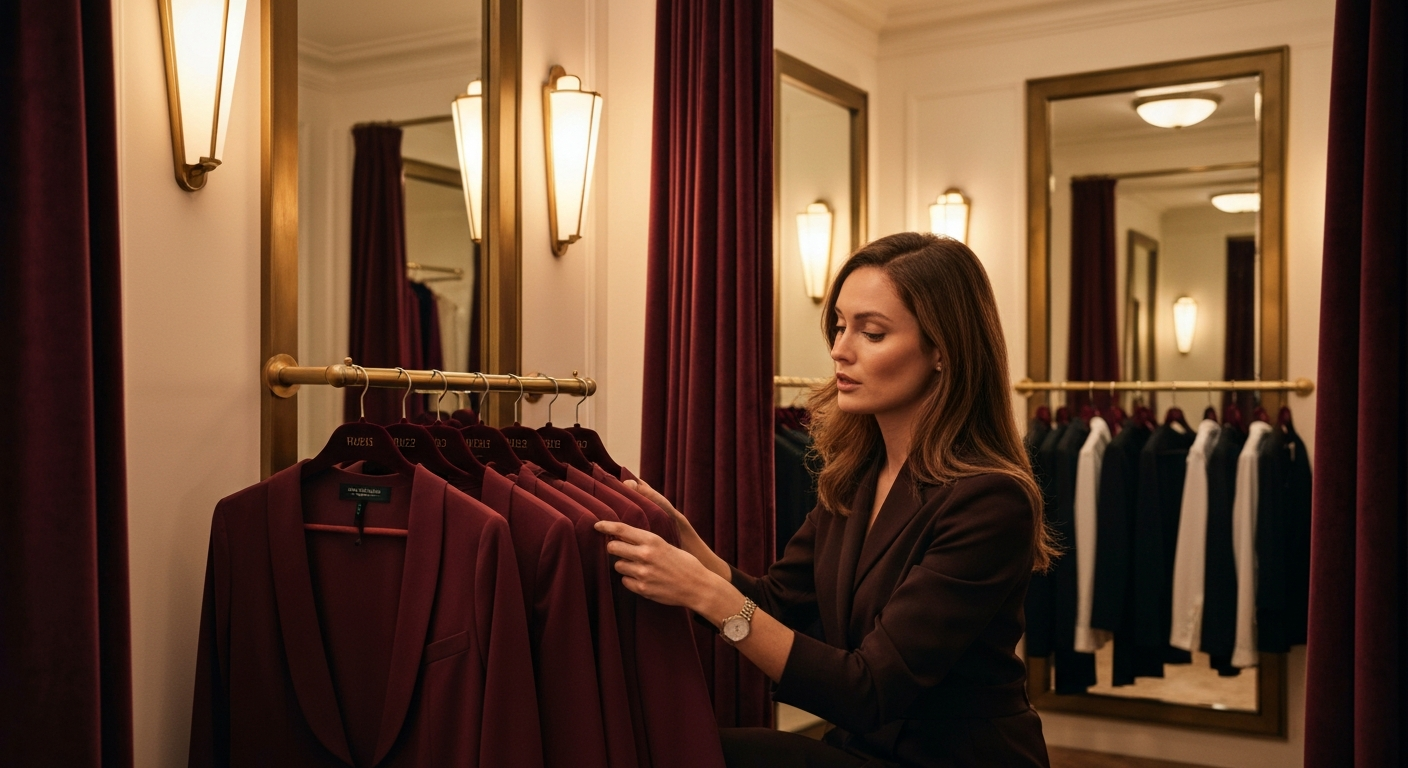
Probably the biggest benefit of my personal style is the confidence it gives me. When I open my closet in the morning, I no longer waste energy on "what should I wear," and can focus on my day instead. Psychologists call this "decision fatigue," the exhaustion that comes from too many everyday decisions. A thoughtfully built wardrobe eliminates that problem.
On a weekend in Paris at Le Bristol on Place Vendôme, I only had carry-on luggage, seven pieces for three days. Every piece matched every other piece, and I could put together 15 different outfits. A friend who was there at the same time had a full suitcase and still "nothing to wear." The difference wasn't the budget, it was clarity about what actually works.
Similar to how journaling gives me clarity in other areas of life, a thoughtfully built wardrobe creates mental space. I don't have to reinvent who I am every single morning. My style already communicates that: confident, classic with a modern touch, quality over quantity.
The Most Common Mistakes on the Way to Your Own Style
Looking back, I made three big mistakes you can avoid. First: I tried to copy other people's style instead of developing my own. Pinterest boards are inspiration, not a blueprint. What looks fantastic on Rosie Huntington-Whiteley can look completely off on you, because your body, your lifestyle, and your personality are different.
Second: I wanted too much at once. A complete wardrobe can't be built in six months, it takes years. Every season, I bought a maximum of five new pieces that truly fit my system. Patience matters more here than budget. The third mistake was ignoring trends completely. That's just as wrong as blindly following them. Some trends suit your style, others don't. The trick is to be selective.
Practical Tips for Developing Your Own Style
- Photograph yourself every day for a week in the outfit you felt most comfortable in. Look for patterns: colors, cuts, silhouettes. That's your starting point.
- Create a "capsule wardrobe" with a maximum of 30 pieces for one season. The rule: every piece must be combinable with at least three others.
- Invest in professional tailoring alterations. A 200-euro blazer that fits perfectly beats any 800-euro off-the-rack blazer that doesn't. I spend about 400 euros a year at the tailor — the best investment ever.
- Use the "cost per wear" calculation for any purchase over 200 euros. Divide it by the realistic number of times you'll wear it. Under 5 euros per wear is good, under 2 euros is excellent.
- Never buy something just because it's on sale. Sale traps were my most expensive mistakes. A discounted piece that doesn't fit your style is wasted money, no matter how big the markdown was.
My Personal Style Today

Today, four years after my closet collapse, I have a style that feels like a second skin. It's classic with a modern twist, invests in quality over quantity, and fits every facet of my life. Whether I'm sitting in the Elbphilharmonie in Hamburg or walking through Prenzlauer Berg on a weekend, I feel like myself.
My closet today holds 87 pieces including shoes and bags. I love every one of them, each carries a story. The blazer I wore to a business dinner in Frankfurt, the pumps from my first date at Grill Royal, the vintage Chanel from my grandmother. That's the difference between fashion and personal style: fashion fades, style stays.
According to a 2024 study by the Cologne Institute for Retail Research, consumers with a defined personal style spend an average of 28 percent less on clothing than those without a clear style identity, yet feel more satisfied with their wardrobe. I can confirm that. I spend less today than I did at 23, own less, but the quality of my life when it comes to fashion has grown exponentially.
Frequently Asked Questions About Personal Style and Authenticity
How do I find my personal style if I have no idea where to start?
Start with a radical inventory of your closet. Lay out every piece and sort it into three categories: I wear it regularly, I wear it rarely, I haven't worn it in a year. Keep only the first category and analyze what these pieces have in common. Colors, cuts, materials give you clues to your natural style. Then supplement deliberately with investment pieces that reinforce that line, instead of buying new trends at random.
How much should I invest in a basic wardrobe?
A solid basic wardrobe with 20-30 high-quality pieces realistically runs between 3,000 and 6,000 euros if you go for quality. That sounds like a lot, but it's spread over two to three years of building it up. Budget for roughly 150-200 euros a month that you spend deliberately on pieces that pass the "10-year rule." A MaxMara coat for 900 euros that you wear for ten years effectively costs you 90 euros a year, while five 100-euro fast-fashion coats that look like trash after two years cost you 250 euros a year.
Can I follow trends and still have a personal style?
Absolutely, but selectively. The rule is: only integrate trends that reinforce your style DNA, not ones that dilute it. If your style is classic-minimalist and oversized blazers are currently trending, that works. If neon colors suddenly become trendy, but you've worn only neutrals for years, skip it. I allow myself a maximum of two trend pieces per season, which I deliberately buy as experiments, never as the core of my wardrobe. That way I stay relevant without losing my identity.
How is personal style different from just "buying expensive clothes"?
Personal style has nothing to do with price, and everything to do with coherence and authenticity. I know women who wear exclusively Chanel and Hermès but have no personal style at all, because they only buy what counts as a status symbol. Conversely, I know women who put together 70 percent of their wardrobe from vintage markets and have an incredibly strong, recognizable style. The difference is whether you buy to impress others or to express yourself. Expensive clothing can be part of your style, but it's never the style itself.
Why is authenticity in fashion more important than following trends?
Authenticity creates recognition value and confidence, while trends make you interchangeable. According to a 2023 survey by the polling institute YouGov, 54 percent of women feel uncomfortable in trend pieces that don't suit their type, but buy them anyway due to social pressure. The result: a full closet, nothing to wear. Authenticity means every piece suits you and you feel comfortable in it. That radiates more attractiveness than any expensive it-piece that makes you feel like you're in costume. That's especially crucial in a lifestyle dating context, where authenticity beats surface impressions.
Conclusion: Your Style Is Your Visual Biography
My personal style today is more than just the way I dress. It's a visual biography that tells who I am, what I stand for, and where I want to go. The journey from trend-chaser to a woman with style confidence wasn't easy, but it taught me that authenticity is the only path to real self-confidence.
If you want to develop your own style, forget the magazines, ignore the Instagram trends, and stop comparing yourself to others. Start observing yourself: what do you feel when you wear it? What do you move most naturally in? What compliments do you get for outfits where you truly felt comfortable? The answers to these questions are your compass. The rest is patience, investment, and the willingness to let go of everything that doesn't suit you. Your closet should reflect you, not other people's expectations. That's the moment fashion becomes personal style.