Horseback Riding as a Path to Confidence and Elegance

Reading time: 11 minutes
When I sat on a horse for the first time two years ago, I never would have thought that moment would change my life so fundamentally. My first dressage lesson at the Hoffmann Riding School in Hamburg-Blankenese ended with me stepping out of the saddle unsteadily, my legs shaking, feeling like I'd never get control of a 600-kilogram animal. Today I train three times a week, sit more upright than ever before, and finally understand how horseback riding builds confidence in a way no gym in the world can replicate.
Equestrian sport has taught me that true elegance can't be trained into you — it grows from within. Every riding lesson is a dialogue between my body, my mind, and a living being that senses my insecurities instantly and reacts to them. This honest confrontation with myself was frightening at first, but became the most valuable lesson of my life.
Why I Started Riding as an Adult Woman
I was 28 when I booked my first trial lesson. Many asked me why I hadn't started as a child. The truth is: I deliberately wanted to find a sport that would challenge me holistically. Learning to ride as an adult woman meant, for me, starting without childlike carefreeness, but with a clear goal in sight.
According to a study by the German Equestrian Federation (FN), 23 percent of all riding students in Germany only start with equestrian sport after age 25. That number rose by 34 percent between 2018 and 2023, which shows that more and more adults are recognizing this sport's transformative power. My motivation was clear: I was looking for an activity that would improve my posture, build my mental strength, and pull me out of my comfort zone at the same time.
At my first encounter with the mare Florentina, I immediately learned the most important lesson: a horse mirrors your inner state. If I was nervous, she became restless. If I found inner calm, she relaxed. That immediate feedback was more intense than any journaling I'd practiced before.
How Riding Builds Confidence: My Personal Breakthroughs
After three months of regular training, I had my first real breakthrough. It was a windy November day in the outdoor arena. Florentina spooked at a flapping plastic bag, and instead of panicking, I sat calmly in the saddle, gently corrected my position, and guided her safely past the supposed obstacle. In that moment, I understood how riding builds confidence: through tiny victories over your own fear.
This effect is well documented scientifically. A 2022 study by the University of Kassel shows that equestrian sport lowers cortisol levels by an average of 18 percent while increasing serotonin production by 27 percent. This hormonal shift explains why I'm more mentally balanced and emotionally stable after every riding lesson than after any other sport I've ever tried.
The Three Phases of My Confidence Growth
- Months 1-3: Building physical fundamentals — I learned to sit in the saddle without tensing up, and developed a feel for the horse's balance
- Months 4-8: Building mental control — I began consciously managing my fear reactions and understood that my thoughts directly affect my body tension
- From month 9 on: Experiencing real partnership — Florentina and I developed a nonverbal communication that showed me what real trust means
Today, after two years of consistent training, I not only ride more confidently, I also make clearer decisions in other areas of my life. The ability to stay calm in critical moments has carried over directly from horseback into my everyday life.
Elegance Through Riding: More Than Just Posture
Before I started riding, I thought elegance was a matter of the right clothes and perfect makeup. Equestrian sport taught me otherwise. Elegance comes from an upright, confident posture that originates from your core — and riding trains exactly that like almost no other sport.
My riding instructor Sabine explains it like this: "The rider's seat only works if your spine is upright, your shoulders relax back, and your pelvis stays mobile." Finding that posture took months. I had to learn to reorganize my body, release tension, and build stability at the same time. The result shows up not just on the horse: my entire everyday posture has transformed.
According to a biomechanical study by the German Sport University Cologne, riding activates 175 different muscle groups simultaneously — more than most other sports. In particular, the deep core muscles are permanently trained by the horse's three-dimensional back movement. After six months of regular riding, I had measurably improved core stability and a thoracic spine that was 12 degrees more upright.
What Specifically Changed
The elegance I've gained through riding shows up in details I wasn't aware of before. I walk differently — more upright, with more sense of space. My gait has become smoother, because I've learned to keep my pelvis mobile instead of walking stiffly. Even the way I sit at a business lunch or a date has changed: I automatically take an upright position, without any effort.
That natural presence is priceless. It has nothing to do with performed confidence — it comes from a body awareness I've built up over hundreds of riding lessons. Similar to developing a personal style, it's about finding authenticity instead of playing a part.
Equestrian Sport for Women: A Special Connection
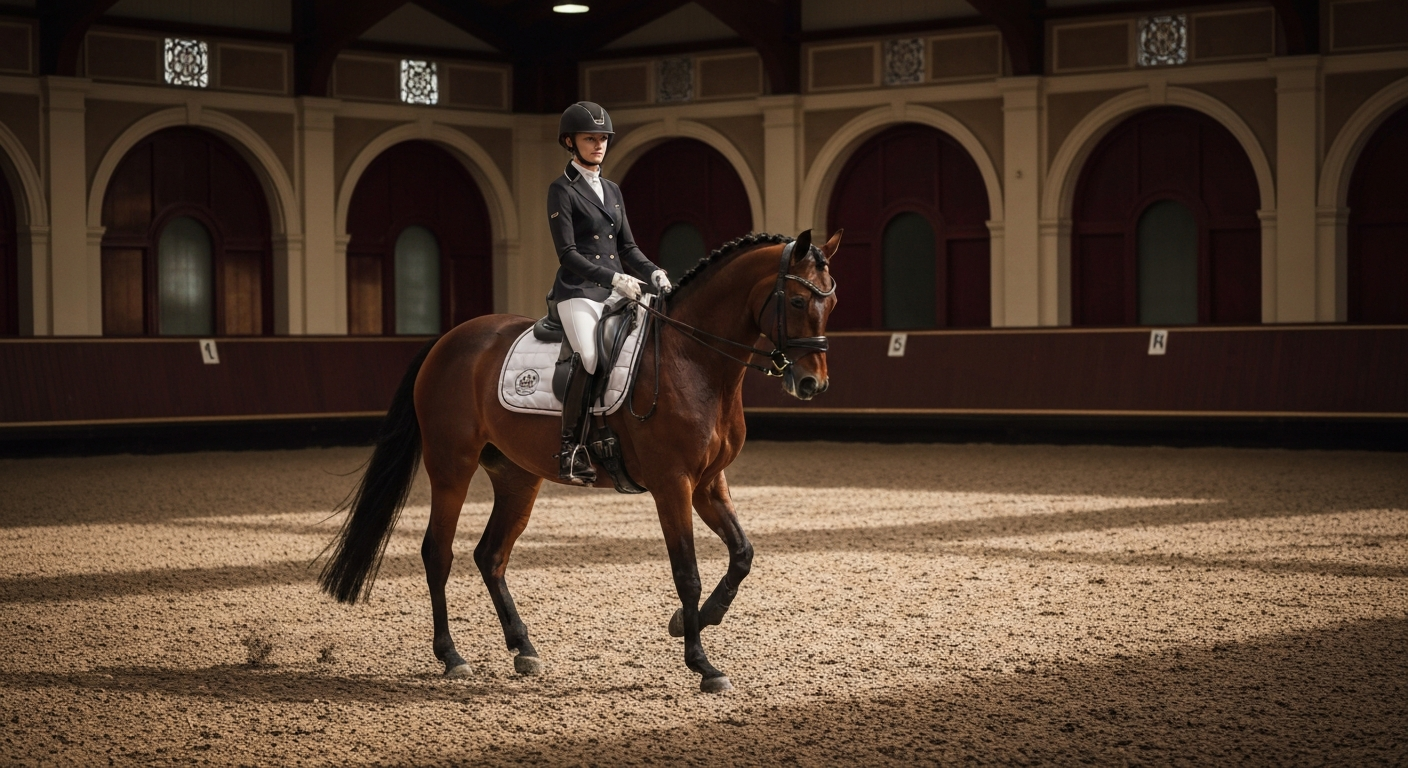
Equestrian sport has a distinctive gender split in Germany: according to FN statistics, 82 percent of all active riders are women. That dominance is no coincidence. Equestrian sport for women offers a safe space where physical strength doesn't count — communication, empathy, and mental strength do.
At my stable in Hamburg, women between 16 and 67 train. The oldest riding student, Margarete, started at 62 and now says she feels physically fitter than she did at 50. This diversity shows that riding knows no age limits, and strengthens women at every stage of life.
What fascinates me especially: in dealing with horses, traditionally "feminine" qualities like patience, intuition, and gentle guidance count for more than raw strength. A 600-kilogram horse can't be controlled through muscle power, only through clear communication and mutual respect. That realization has fundamentally changed my view of strength.
The Practical Side: Costs, Time Investment, and Realistic Expectations
I want to be honest: riding isn't a cheap hobby. My monthly costs add up to about 420 euros, split between three weekly riding lessons at 35 euros each and a horse-sharing arrangement for 120 euros a month. On top of that come one-time investments like a riding helmet (180 euros for a model by Uvex), riding boots (350 euros for Cavallo), and riding pants (90-150 euros each).
The time investment is considerable too. I budget two hours per riding lesson: 30 minutes for grooming and saddling the horse, 45-60 minutes of riding time, and another 15-20 minutes for unsaddling and care. But that time is never wasted — the stable work is part of the meditative routine that brings me mentally to rest.
My Realistic Learning Curve
After two years of intensive training, I can ride confidently at a walk, trot, and canter, perform simple dressage exercises, and handle small jumps up to 60 centimeters. I'm far from a professional rider, but that's exactly what makes it appealing: there's always something new to learn, always a challenge that moves me forward.
Learning to ride as an adult woman also means dealing with setbacks. I've had days when nothing worked, when I got out of the saddle frustrated and thought I'd never learn it. But exactly those moments taught me to persevere — a lesson I can also apply to clearly communicating my expectations in other areas of life.
Which Sports Really Improve Posture?
I've tried many sports in my life: yoga, Pilates, strength training, swimming. All had positive effects on my fitness. But no sport has transformed my posture as lastingly as equestrian sport.
The difference lies in the three-dimensionality of the movement. While yoga holds static positions, a horse's back moves constantly on three planes while riding: forward-backward, left-right, up-down. Absorbing that movement while maintaining a stable core trains the neuromuscular system in a unique way.
A 2023 comparative study by the University of Giessen examined the effects of different sports on core stability. The result: after twelve weeks, riders showed a 34 percent improvement in core stability, Pilates practitioners 28 percent, and strength athletes 19 percent. The reason lies in the functional wholeness of equestrian sport, which doesn't train isolated muscles but complex movement patterns.
Equestrian Sport for More Elegance and Presence: The Mental Component
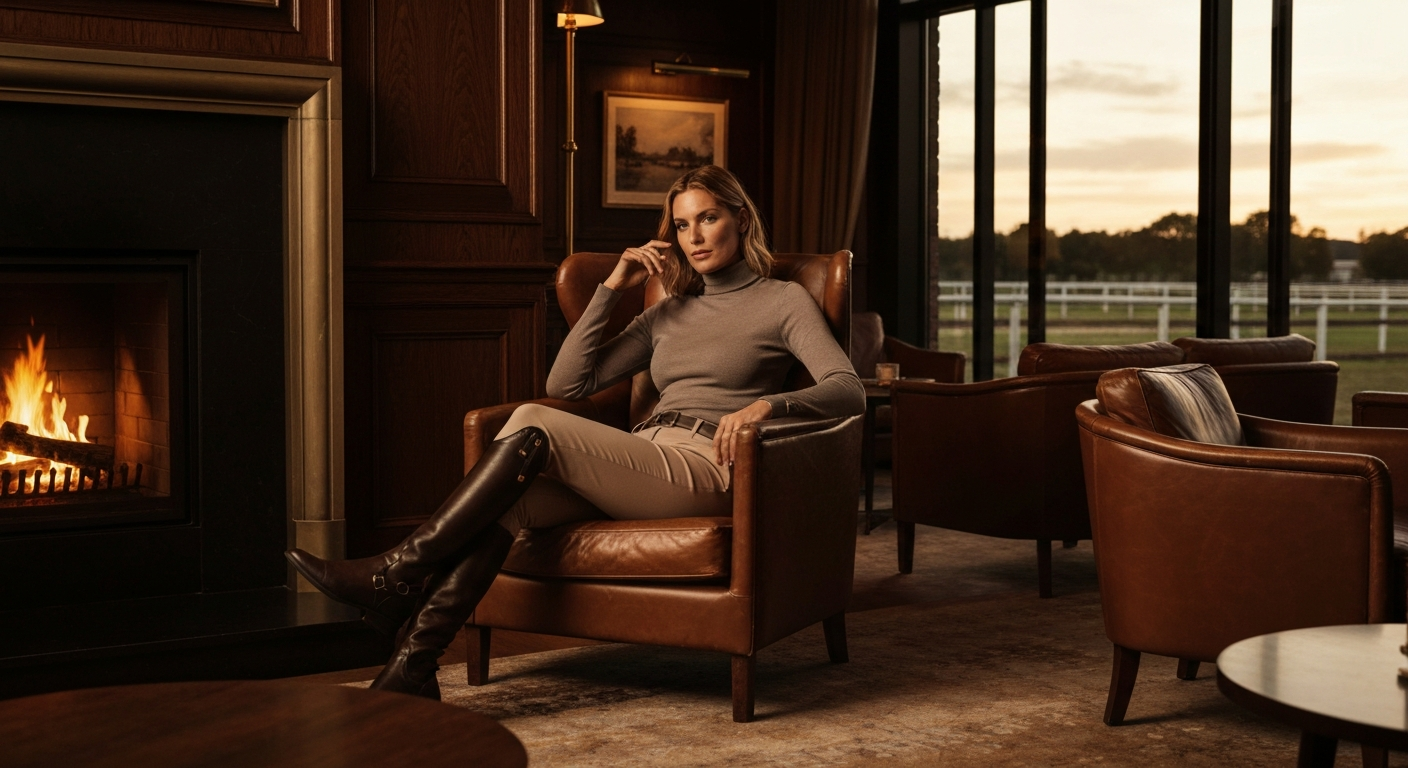
What makes equestrian sport unique is the combination of physical and mental training. Every riding lesson is also a lesson in mindfulness, presence, and emotional control. A horse reacts to the finest nuances of your body tension, your breathing, your inner state.
This sensitivity has taught me to treat myself more consciously. I've learned to regulate my emotions before I even get in the saddle. On days when I'm stressed or angry, I take ten minutes for breathing exercises before I bring Florentina out of her stall. This practice of self-regulation has spread into every area of my life.
The presence that comes from equestrian sport is the result of this inner work. It's the calm of a person who has learned to stay centered in challenging situations. It's the elegance of a movement that comes from genuine body control, not from a rehearsed pose.
How Equestrian Sport Shapes Personality: My Biggest Lessons
Riding has taught me patience. Some days I need 20 minutes just to get Florentina to stand still at the mounting block. These small exercises in patience have made me more patient overall — with other people, but above all with myself.
Riding has shown me what real responsibility means. Leading a living being ten times heavier than me requires absolute presence and mindfulness. Taking that responsibility seriously has changed my self-image: today I see myself as someone equal to challenges.
Riding has taught me humility. No matter how good I get, there's always a day when the horse reminds me I still have a lot to learn. That humility keeps me from arrogance and keeps me open to continuous growth.
FAQ: Riding, Confidence, and Elegance
How long does it take before riding noticeably builds confidence?
For me, it took about three to four months of regular training before I noticed the first mental changes. After six months, the effect was clear: I felt calmer in stressful situations and made clearer decisions. The physical effects on posture and presence showed up after about eight months of continuous training. Important: once a week isn't enough — I recommend at least two, better three training sessions a week for lasting results.
Is learning to ride as an adult woman dangerous?
Like any sport, riding carries risks, but with the right guidance and equipment, they're manageable. In my two years, I had one minor fall while jumping, which, thanks to my riding helmet and safety vest, had no lasting consequences. Statistically, the injury rate for recreational riding, according to the German Statutory Accident Insurance, is 3.2 accidents per 1,000 riding hours — lower than many ball sports. The key is starting at a reputable riding school with trained horses and not overestimating yourself.
Which sports improve posture most effectively?
Based on my personal experience and scientific studies, riding, classical ballet, and Pilates are the three most effective sports for upright posture. Riding tops the list because it builds functional strength that carries directly over into everyday posture. The constant balancing of the horse's movement trains the deep back muscles more intensely than static exercises. Combined with targeted core strength training, the effects are the most lasting.
How much does learning to ride as a beginner realistically cost?
In Hamburg, the cost of a riding lesson ranges between 30 and 45 euros, depending on the riding school. For solid progress, I recommend three lessons a week, so 360-540 euros a month. On top of that come one-time investments: riding helmet (150-250 euros), safety vest (100-200 euros), riding boots (200-400 euros), and several pairs of riding pants (80-150 euros each). In the first year, you should budget total costs of 5,000-7,000 euros. That sounds like a lot, but for me it's an investment in my personal development, comparable to high-quality coaching.
Can riding really change your presence?
Absolutely, and on several levels. Improved posture alone changes how other people perceive you — studies show that upright posture is associated with competence and confidence. Beyond that, working with horses develops a calm, present demeanor that comes from genuine inner strength. People around me have told me several times that I seem "different" since I started riding — more centered, more confident, more elegant. That change doesn't happen overnight, but it's lasting and authentic.
Conclusion: Riding as an Investment in Yourself
Riding is more than a sport — it's a school for life. The combination of physical training, mental discipline, and emotional work makes equestrian sport unique. After two years, I can say: no other hobby has changed my personality so positively.
The investment in time and money is considerable, but the return is priceless. I haven't just learned to ride — I've also learned who I want to be: confident, elegant, present, and able to meet challenges with calm. Those qualities open doors — in life, in relationships, in your career.
If you're considering starting to ride: don't wait for the perfect moment. Book a trial lesson at a reputable riding school, get in the saddle, and feel what it's like to guide such a powerful animal. It could be the start of a transformation that changes your whole life — the way it did for me.