Preparing for the Opera: My Path to Becoming a Connoisseur
Reading time: 11 minutes
When I received the invitation to the premiere of Verdi's "La Traviata" at the Vienna State Opera, my heart beat faster — out of anticipation, but also a certain nervousness. I had already attended many exclusive events, but a classic opera visit was uncharted territory for me. The thought of sitting in a historic opera house among seasoned culture connoisseurs, without knowing the unwritten rules, spurred me on to prepare thoroughly. What I learned in the three weeks before that evening didn't just turn my opera visit into an unforgettable experience, it transformed my entire understanding of classical music.
Proper preparation for an opera visit doesn't begin on the day itself. It's a journey that led me deeper into a world where culture, elegance, and indulgence merge in a singular way. Today I'm sharing my tried-and-tested strategy for how to prepare for an opera visit and become a confident connoisseur in the process.
Understanding the Choice of Work: My First Research
Before I even thought about my outfit, I devoted myself to the work itself. I only knew "La Traviata" by name. I started with structured research: first I read a modern summary of the plot on operabase.com, then I dove into the historical context. Verdi's opera is based on Alexandre Dumas' 1848 novel "The Lady of the Camellias" and deals with a subject scandalous by the standards of the time — the love story of a courtesan.
What helped me especially: two weeks before the visit, I listened to 20-minute excerpts of the opera on Spotify every day. The famous aria "Libiamo ne' lieti calici" (the drinking song from the first act) in particular became so familiar to me that I recognized it instantly during the live performance. According to a 2023 study by the German Music Information Center, 78 percent of surveyed opera-goers said that prior knowledge of the music significantly increased their enjoyment of the live experience.
My concrete tip: download the libretto app "Opera Guide" (free for iOS and Android). It offers summaries, scene-by-scene descriptions, and even real-time translations. I used it to read the German translations of the Italian text beforehand — that made the difference between passive listening and real understanding.
Taking the Composer's Perspective
I went a step further and looked into Giuseppe Verdi himself. On the website of the music publisher Ricordi, I found a fascinating biography that showed me how Verdi was considered a revolutionary of Italian opera. This context helped me enormously in grasping the emotional depth of the music on the evening itself. You understand an opera better when you know why the composer made certain musical choices.
The Dress Code: How I Put Together My Opera Wardrobe
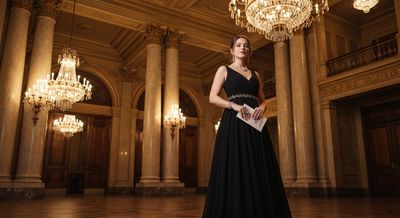
The question of "what to wear to the opera" occupied me at least as intensely as understanding the work. After my research, I found that the dress code varies depending on the opera house, performance, and seat. For a premiere at the Vienna State Opera, evening wear is mandatory. I chose a floor-length, dark green velvet dress from Reformation (498 euros), paired with understated diamond stud earrings and a small Saint Laurent clutch.
Important to know: for regular performances at the Munich National Theatre or the Staatsoper Unter den Linden in Berlin, elegant-formal attire is enough. A knee-length cocktail dress or a high-quality pantsuit are completely appropriate. What's absolutely taboo: jeans, sneakers, backpacks, or overly casual clothing. Even though dress codes are more relaxed today than in the past, an opera visit remains an occasion where style and respect for the institution are on display.
When it comes to shoes for important occasions, I always prioritize comfort without compromising on elegance. For the opera evening, I chose classic pumps with a 7-centimeter heel — high enough for elegance, low enough to stroll relaxed through the magnificent foyers during intermission too. Keep in mind: an opera visit often lasts three to four hours including intermissions, so comfortable footwear pays off.
Accessories and the Details That Count
Less is definitely more when it comes to opera wardrobe. I only wore my stud earrings and a delicate gold bangle. Jingling jewelry can be distracting during the quiet, intimate moments of a performance — not just for you, but for the people sitting near you too. I applied my perfume sparingly: two spritzes of Chanel No. 5 in the morning, so it had faded to something subtle by evening. In enclosed spaces, an intense scent can quickly become overwhelming.
Opera Etiquette: The Unwritten Rules I Learned
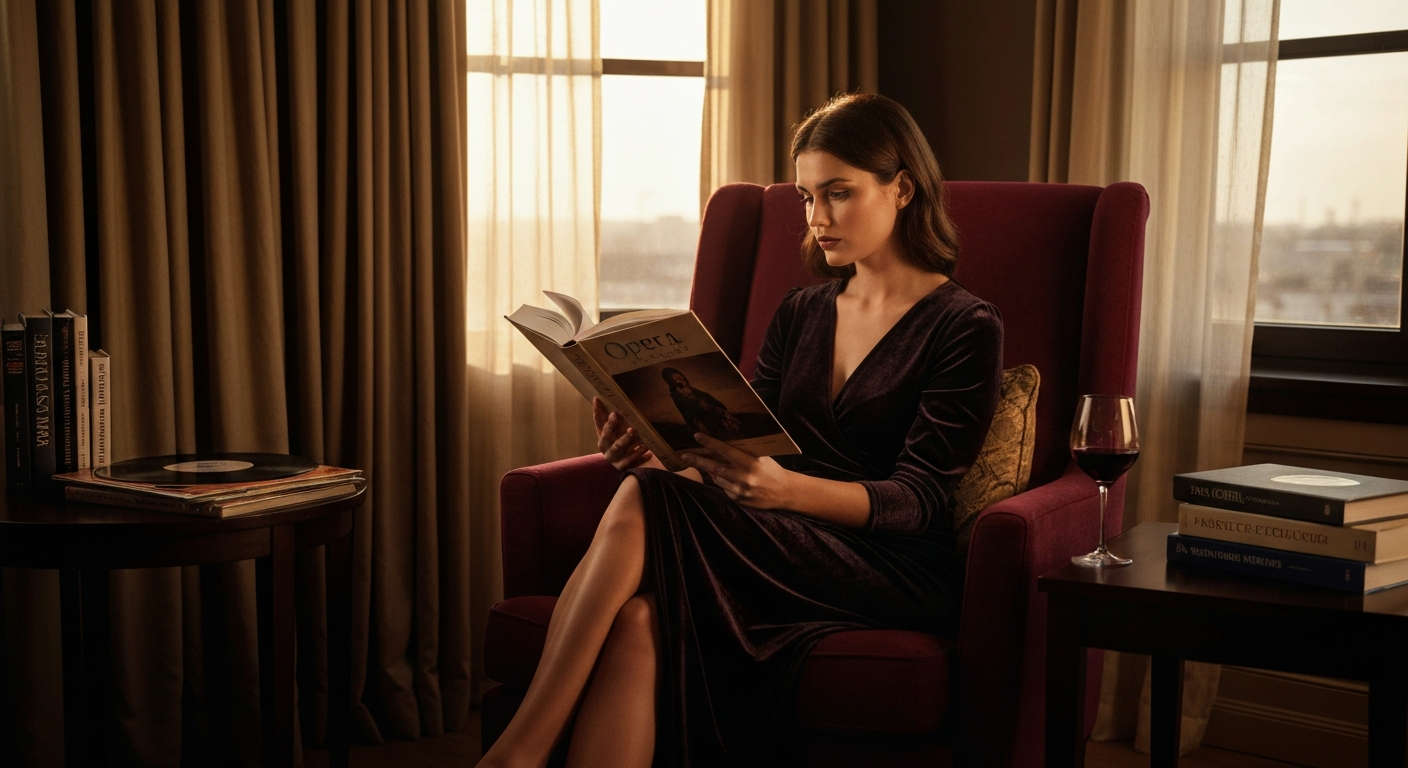
Etiquette at the opera house follows clear, if often unspoken, rules. I made it my task to study these in advance, so I could appear confident on the evening itself. The first important rule: punctuality is absolutely crucial. In most opera houses, the doors close exactly at the start of the performance, and latecomers are only let in during intermission. I arrived 45 minutes early, giving myself time to check my coat, study the program in the foyer, and let the architecture sink in.
During the performance: an absolute phone ban applies. Not just on silent — completely off. A glowing screen is massively disruptive in the dark. I put my iPhone in my clutch and left it there until the last curtain fell. Coughing should also be suppressed as much as possible. I brought cough drops just in case (individually unwrapped in a small fabric pouch to avoid rustling), which I kept within reach during intermission.
One point that became especially important to me: applause. Unlike in the theater, applause at the opera happens between acts, but not between individual scenes. During the first act, I closely observed when the experienced audience started clapping — usually after particularly impressive arias or at the end of an act. The "bravo" call (for male singers "bravo," for female singers "brava," for several "bravi") is reserved for the end, when the artists come onstage for their bow.
The Art of Conversation During Intermission
I used the two 25-minute intermissions not just for a champagne reception (a glass of Laurent-Perrier Brut for 18 euros), but above all for conversation. This is where the value of my preparation showed. When an older gentleman next to me asked how I liked the staging, I could speak concretely about the choice of set design and draw connections to the original 1853 production. Moments like this, of real conversation, create connections and show genuine interest in the subject.
Deepening Cultural Understanding: My Strategies
To truly understand classical music, I went beyond mere listening. Two weeks before the opera visit, I attended a one-day workshop, "Opera for Beginners," at the Vienna adult education center (89 euros, six-hour course). There I learned the basics of opera structure: what distinguishes an aria from a recitative? How does a libretto work? What role does the orchestra play? According to the Federal Association of the Music Industry, around 4.2 million Germans attended at least one opera performance in 2023 — a figure rising 12 percent among 25- to 35-year-olds compared to 2019.
I also created a personal playlist with different opera styles: from Mozart's "The Magic Flute" (easily accessible, in German) to Puccini's "Tosca" (melodic, emotional) to Wagner's "Ring of the Nibelung" (complex, epic). That way I trained my ear for different compositional styles and eras. After four weeks, I could already tell by ear whether an aria came from the Baroque period, Romanticism, or the modern era.
Opera Tours and Behind the Scenes
An absolute insider tip that deepened my appreciation: I booked a backstage tour of the Vienna State Opera (16 euros, every first Sunday of the month at 2pm). The look behind the scenes — the massive stage machinery, the costume workshops with over 150,000 costumes, the rehearsal rooms — made clear to me what a logistical and artistic feat lies behind every performance. That perspective made my later visit all the more valuable.
My Checklist for the Perfect Opera Preparation

After my first opera visit, and seven more performances since then in Hamburg, Munich, and Zurich, I've developed a tried-and-tested preparation routine. I start these steps roughly three weeks before the planned visit:
- Start researching the work: read the plot, understand the historical context, study the composer's biography (invest at least 2 hours)
- Listen to the music beforehand: listen to the main arias and overture for 15-20 minutes daily, ideally comparing different interpretations
- Clarify the dress code: check the opera house's website, call ahead if unsure, put together and try on your full outfit two days in advance
- Plan your journey: prefer public transport (parking is scarce and expensive), plan for at least 45 minutes of buffer before the performance starts
- Pre-order the program: many opera houses offer digital programs to download, I like to read through these calmly two days beforehand
Frequently Asked Questions About Preparing for the Opera
How do I prepare for an opera visit if I've never seen an opera before?
Start with an accessible opera like Mozart's "The Magic Flute" or Bizet's "Carmen" — both have catchy melodies and clear plots. Two weeks beforehand, read the summary on the opera house's website, listen to the most famous arias on Spotify or YouTube, and maybe watch a recorded version (many are available on arte.tv or medici.tv). I found the Metropolitan Opera On Demand especially helpful, which offers recordings with German subtitles. Invest at least three to four hours in this preparation — that sounds like a lot, but it makes the difference between confusion and enjoyment.
What does a woman wear to the opera in fall or winter?
For premieres and gala performances, an elegant evening gown is the right choice — floor-length or knee-length, paired with closed-toe pumps and a small evening bag. I prefer fabrics like velvet, silk, or high-quality wool crepe. For regular performances, an elegant cocktail dress or a pantsuit with a silk blouse is enough. Important: bring an elegant jacket or blazer, since opera houses are often air-conditioned and it can get cool. My insider tip is a cashmere-colored pashmina scarf from Johnstons of Elgin (from 189 euros), which can be draped elegantly over the shoulders and keeps you warm without covering up the outfit. Avoid too much bare décolletage at traditional houses — a touch of elegance and restraint is appreciated.
How do I understand an opera better, even if it's sung in a foreign language?
Most opera houses in Germany, Austria, and Switzerland now offer surtitles — small screens above or beside the stage that translate the text in real time. That said, I recommend reading the libretto (the opera's text) beforehand. At operalibretto.org you'll find most classic works free with translation. Even better: download the "OperaVision" app, which combines synchronized text with audio recordings. That way you can follow along while listening and internalize the connection between word and music. In my experience, it's enough to know the plot act by act — you don't have to understand every word to grasp the emotional impact. The music itself often tells more than the words.
What rules of conduct apply at the opera house, and how do I avoid a faux pas?
The most important rules: be in your seat at least 15 minutes before the start, turn your phone completely off (not just silent), avoid rustling candy wrappers or programs during the music, only applaud at the end of an aria or an act (never in the middle), and only leave your seat during intermission. If you need to cough, hold a handkerchief to your mouth and try to be quiet. During intermission, feel free to explore the foyer, have a glass of champagne, or chat with other attendees — that's part of the experience. After the performance, it's customary to give a standing ovation if the performance was exceptional. Watch the audience around you, especially in the front rows — that's often where regulars sit, whose behavior you can take cues from.
Is an opera visit worth it with cheaper seats, or should I save up for pricier tickets?
I've sat both in the stalls (150 euros per ticket for "La Traviata" in Vienna) and in the third tier (38 euros for "The Magic Flute" in Munich). My honest opinion: for a first visit, I recommend a mid-range seat in the first or second tier (between 60 and 90 euros). From there you have excellent views of the stage and orchestra, the acoustics are usually excellent, and you can see the singers' facial expressions well enough. The most expensive seats in the stalls are of course prestigious and offer maximum proximity, but for the pure sound experience they're often not necessarily better. Many opera houses also offer special deals for young visitors under 30 — the Bavarian State Opera, for example, has tickets from 10 euros for students. Better to invest in several cheaper visits than one extremely expensive one — that way you build your understanding and enthusiasm more sustainably.
My Personal Conclusion: From Preparation to Passion
The intensive preparation I put into "La Traviata" back then wasn't a one-time effort — it became the foundation of a new passion. Today, two years later, I have a subscription for four performances per season at the Deutsche Oper Berlin, and I sometimes plan my trips around particular productions. What began as nervous preparation for a date grew into an essential part of my cultural life.
The key lies in seeing preparation not as a duty, but as part of the enjoyment. If you invest a few minutes daily for three weeks in the music, understand the work, and dress with confidence, the opera evening itself becomes an experience full of moments of recognition and emotional highlights. You'll feel the goosebumps when the aria you already know plays, you'll understand the dramatic twists, and you'll move through the intermissions with confidence.
Similar to navigating the art world, the opera too is about approaching an established culture with curiosity and respect. Nobody expects you to become an expert after one visit — but the willingness to prepare and learn is always appreciated. And who knows: maybe, like me, you'll discover a passion that enriches your life in unexpected ways.
My advice to close: book your first ticket today. Choose a work that interests you, plan three weeks of preparation time, and experience an art form that has captivated people for centuries. The world of opera is waiting to be discovered by you — with the right preparation, this first step becomes an unforgettable experience.