Caviar Tasting: My Introduction to an Exclusive World of Indulgence
Reading time: 9 minutes
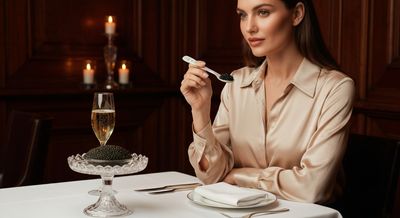
I'm sitting at Caviar House & Prunier on Berlin's Gendarmenmarkt, three mother-of-pearl spoons in front of me and tiny glass bowls filled with shimmering black pearls. My first proper caviar tasting appointment. Until three months ago, I thought caviar was just caviar — salty, expensive, done. Today I know there are worlds between Siberian Osietra and Iranian Beluga, and I'm taking you along on this journey of discovery.
What surprised me? Good caviar doesn't taste like fish. It tastes of the sea, of nutty notes, sometimes of butter. And the price? I pay 180 euros here for 30 grams of Beluga — but by now I understand why. According to the German Caviar Import Report 2024, roughly 12.3 tons of caviar were imported into Germany last year alone, with the trend rising. The delicacy has long since stopped being a pure status symbol and has become part of a conscious culture of indulgence.
What Caviar Really Tastes Like and What to Watch for the First Time
My caviar mentor Elena, who has worked for Caviar House for eight years, explains the three golden rules to me: never taste it with metal cutlery, or the flavor gets distorted. Always serve at room temperature, never ice cold. And most important of all: don't chew the pearls, gently press them against your palate instead.
I start with the Siberian Osietra, medium grain, golden-brown color. Elena places half a teaspoon on the back of my hand between thumb and index finger — the classic way professionals do it. The first taste: creamy, slightly nutty, a hint of iodine. Nothing like what I expected. The pearls burst gently, releasing flavors that unfold over several seconds.
The second: Baerii, also known as Russian caviar, smaller in grain, more intense in taste. Here an earthy note dominates, almost mushroom-like. Elena explains that this variety pairs particularly well with blinis and crème fraîche — I make a mental note for my next dinner.
With the third, the Beluga, things get serious. The largest pearls, shimmering pale gray, cost up to 8,000 euros per kilo. I let them melt on my tongue: buttery-soft, absolutely mild, with a complexity I can barely put into words. This isn't just an ingredient anymore, it's an experience in its own right.
How to Properly Enjoy Caviar Tasting as a Beginner Without Mistakes
After four tastings in Berlin, Munich, and once at Berlin's KaDeWe, I've gathered a few lessons nobody told me beforehand. First: don't overdo it. The first time, 10 to 15 grams are completely sufficient. Your taste buds tire quickly, and by the fourth variety I can barely tell the differences anymore.
Second: the right pairing makes all the difference. Dry champagne, ideally a Blanc de Blancs, brings out the salty notes without overpowering them. At my tasting during last autumn's wine tasting workshop, I learned that a Ruinart Blanc de Blancs, with its fine perlage, harmonizes perfectly with Osietra. Vodka works too — but only ice cold, clear, without added flavors.
Third: never treat caviar as a main course straight off the spoon. The classic pairing is potato rösti or lukewarm boiled potatoes with sour cream. At the restaurant Fischers Fritz in the Regent Berlin, they serve Osietra on a lukewarm potato cream with chive oil — a combination I've been recreating at home ever since.
- Use mother-of-pearl or wooden spoons, never metal
- Take the caviar out of the fridge 30 minutes before serving
- At tastings, always taste from mild to intense: Beluga, Osietra, then Baerii
- Choose neutral accompaniments: crème fraîche, boiled potatoes, unsalted butter
- Neutralize your palate with still water between varieties
Which Caviar Pairs With Which Champagne, and Why
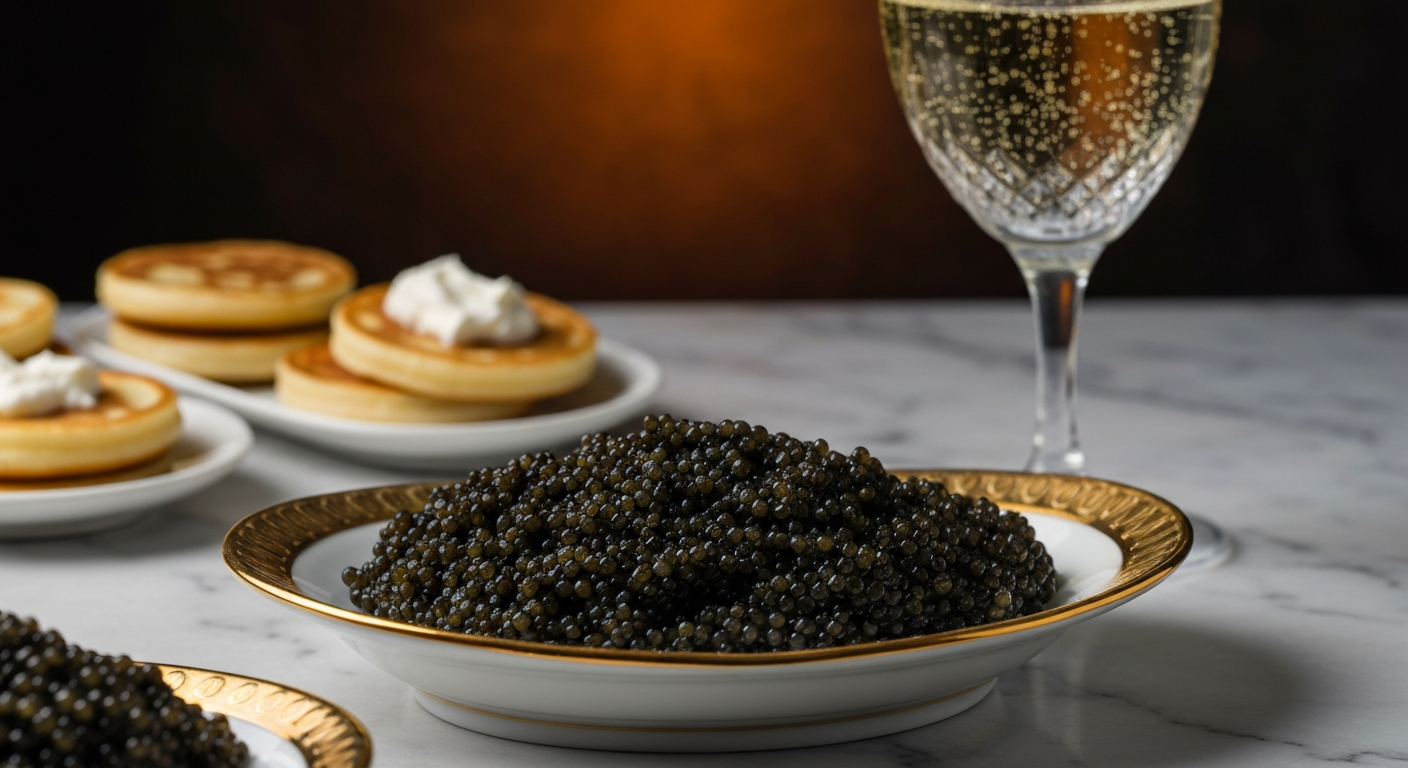
Elena recommends beginners pair Baerii with a Perrier-Jouët Grand Brut. The champagne's fruity notes perfectly balance the caviar's earthy aromas. I tested this myself: it genuinely works brilliantly.
For more advanced palates, there's the ultimate pairing: Beluga with a Krug Grande Cuvée. Here two absolute luxury products meet — and the result is pure harmony. The champagne brings a creamy texture that doesn't overpower the delicate structure of the Beluga caviar, but enhances it.
An insider tip from Elena: Osietra with a rosé champagne, such as Laurent-Perrier Cuvée Rosé. The red berry notes create a surprising counterpoint to the caviar's nutty flavors. I tried this at a private dinner in Charlottenburg — my guests were thrilled.
According to a 2024 study by the International Caviar Importers Association, 68 percent of European caviar consumers prefer pairing it with champagne over vodka or white wine. The reason: the acidity and fine bubbles cleanse the palate without masking the subtle flavors.
Observing Caviar Etiquette at an Upscale Dinner Without a Faux Pas
At my first upscale dinner featuring caviar, I made several mistakes at once. I took too much at a time, ate it with a fork, and drizzled the caviar with lemon. Elena just smiled — but later explained why all of that was wrong.
The correct amount: half to a full teaspoon per bite. More looks greedy, less wastes the tasting experience. The spoon should be mother-of-pearl, horn, or wood — never metal, which oxidizes and distorts the flavor immediately.
Lemon is taboo with high-quality caviar. It completely drowns out the subtle nuances. That's only done with inferior roe, to mask the fishy taste. With genuine Beluga or Osietra, it would be an insult to the delicacy — and to the host.
The ideal serving temperature is between 8 and 10 degrees Celsius. At the restaurant Rutz in Berlin-Mitte, the caviar is presented on a bed of crushed ice, with the glass itself resting slightly elevated — that way the temperature stays constant without the caviar coming into direct contact with the ice.
Another point I learned from my etiquette experiences in the art world: never order caviar as a main course when dining with someone for the first time. It should be a starter or an amuse-bouche — a luxurious opening, but not the central element of the meal.
Where to Try High-Quality Caviar in Germany

After my first experiences, I put together a list of places where I could really try good caviar — not just buy it, but in a setting that makes the experience perfect.
Caviar House & Prunier in Berlin on Gendarmenmarkt offers a one-hour tasting every Wednesday and Saturday at 4pm for 95 euros per person. You try four varieties, get champagne alongside, and learn from real experts. The slots are often booked out weeks in advance — I reserved mine six weeks ahead.
At Feinkost Käfer on Munich's Prinzregentenstraße, there's a caviar bar where you can order different varieties individually. Perfect for anyone who doesn't want to commit to a full tasting right away. I tried 15 grams of Baerii there for 48 euros, served with homemade blinis — an ideal introduction.
Berlin's KaDeWe has its own caviar section on the sixth floor in the delicatessen department, with four to six varieties available for tasting at all times. You can also buy smaller quantities starting at 10 grams there and get personalized advice. My contact there, Mrs. Bergmann, has over 15 years of experience and gives invaluable tips.
In Hamburg, the Nikolai Quartier in the Alsterhaus is the top address. Every first Friday of the month, a caviar-and-champagne pairing takes place there, costing 120 euros and limited to 12 participants. What's special: you also learn about the origin and breeding of the sturgeon, including sustainability certifications.
My Personal Takeaways After Six Months of Discovering Caviar
I never would have thought I'd one day know more about caviar than about handbags — but here I am. After six months of regular tastings, four caviar dinners, and countless conversations with sommeliers and delicatessen dealers, I haven't just trained my palate, I've discovered a whole new level of the culture of indulgence.
My favorite remains the Osietra. It's not as overwhelming as Beluga, but complex enough to keep discovering new nuances. And at 80 to 120 euros per 30 grams, it's still within reason for special occasions.
What I've learned: caviar isn't a show, not a pure luxury flex. It's a world of flavor you have to unlock for yourself — just like good wine or single malt whisky. It takes time, patience, and the willingness to really taste. Just like with my wealth building, it's about long-term investment in quality, not quick effects.
Today I order caviar with confidence, I know which variety suits which occasion, and I can explain precisely to my companions why this Beluga costs 180 euros — and why it's worth it. That's not showing off, that's appreciation. And that's exactly what lifestyle dating is about: real experiences where both sides grow.
Frequently Asked Questions About Caviar Tasting
How much does a caviar tasting cost for beginners?
A professional caviar tasting in Germany costs between 85 and 150 euros per person. You usually taste three to four varieties totaling 30 to 50 grams of caviar, often including champagne or vodka. At Caviar House Berlin, you pay 95 euros for a one-hour beginner tasting with four varieties and a glass of champagne. Alternatively, you can order a caviar starter at an upscale restaurant for 45 to 80 euros and gather your first experiences that way.
Which caviar is best suited for beginners?
For getting started, I recommend Baerii or Osietra. Both have a mild, nutty taste without the intense saltiness of cheaper varieties. Baerii costs around 60 to 80 euros per 30 grams and offers an authentic caviar experience without overwhelming the palate. Beluga is technically the top tier, but often too subtle for beginners — you only recognize its fine nuances once you've already tried other varieties.
Can you properly enjoy caviar at home too?
Absolutely, if you follow a few rules. Buy fresh caviar from specialized dealers like KaDeWe Berlin or Feinkost Käfer Munich, never at a regular supermarket. Store it in the coldest part of the fridge at 0 to 2 degrees and use it within three days of opening. Serve it with mother-of-pearl spoons, crème fraîche, and lukewarm boiled potatoes. A good champagne like Ruinart Blanc de Blancs rounds off the experience. That way you create a restaurant feeling at home for about 120 euros for two people.
Why can't you eat caviar with metal spoons?
Metal oxidizes on contact with caviar and distorts the flavor immediately. It creates an unpleasant, slightly bitter aftertaste that overlays the delicate flavors. That's why professionals only use mother-of-pearl, horn, wood, or ceramic. I tested the difference myself: with a silver spoon, the same Osietra tasted noticeably more metallic and flat than with a mother-of-pearl spoon. Invest in a good set of mother-of-pearl spoons for about 25 to 40 euros — it's worth it from your very first tasting.
Does caviar really pair well with champagne, or is that just a cliché?
The pairing is anything but a cliché — it works perfectly on a flavor level. The acidity and fine bubbles of the champagne cleanse the palate between bites and bring out the caviar's creamy, nutty notes. According to the International Caviar Importers Association Report 2024, 68 percent of European caviar consumers prefer champagne as an accompaniment. I personally swear by a dry Blanc de Blancs with Osietra — try it and you'll understand why this pairing is a classic.